
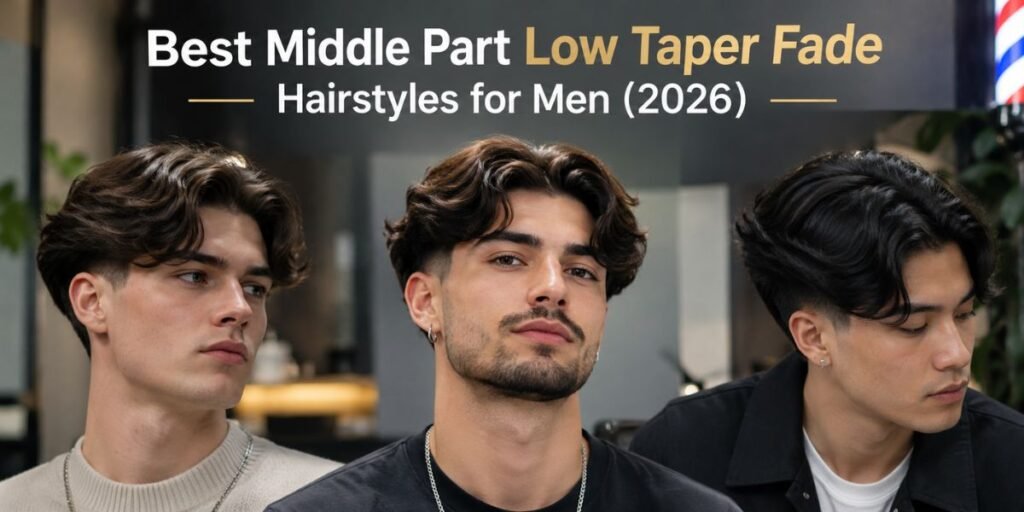
A middle part low taper fade pairs a center parted top with sides that shrink gradually toward the ears and neckline. It looks clean at the office, relaxed on weekends, and sharp in photos. Best of all, it works on straight, wavy, and curly hair.
This guide covers what the cut is, who it suits, and what to tell your barber. You’ll also get styling steps, product picks, and upkeep timing, so you can walk out of the shop with the exact result you pictured.
What Is a Middle Part Low Taper Fade?
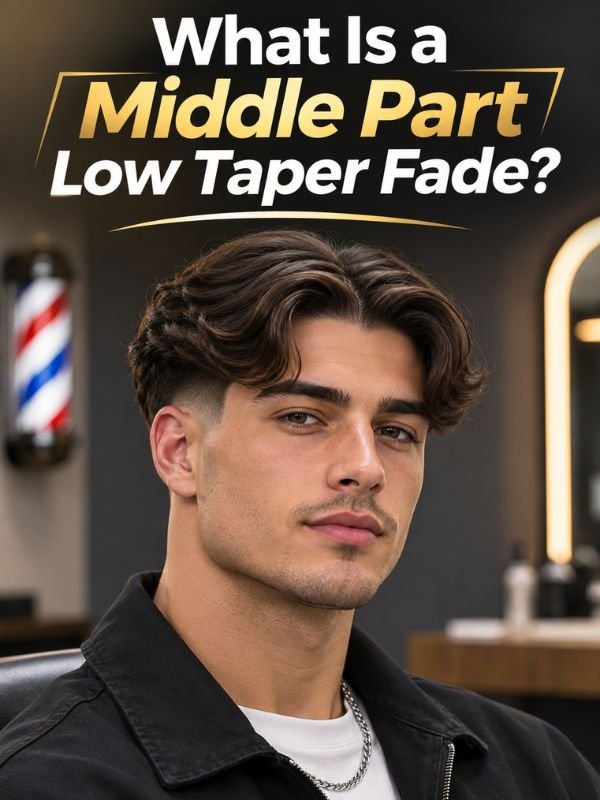
A middle part low taper fade is a haircut with longer hair on top, parted down the center, and short sides that taper low around the ears and nape. The taper begins just above the ear and finishes at the natural hairline. Because the fade stays low, most of the side hair remains visible.
Think of it as a softer cousin of the high fade. The contrast is gentle rather than dramatic. That gentle shift is why the cut reads as polished instead of aggressive.
Popular Middle Part Taper Variations
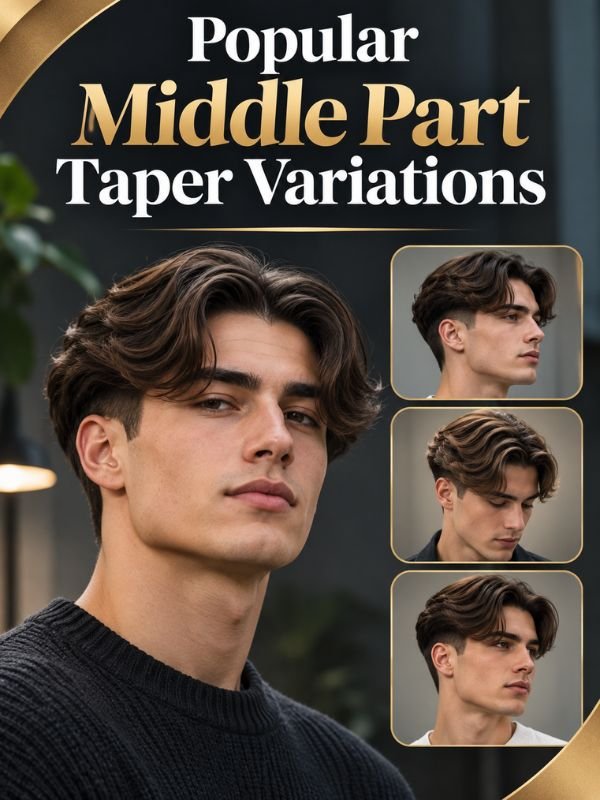
Each variation below keeps the same low taper base. The top length, texture, and shape are what change the mood.
Middle Part Taper Fade
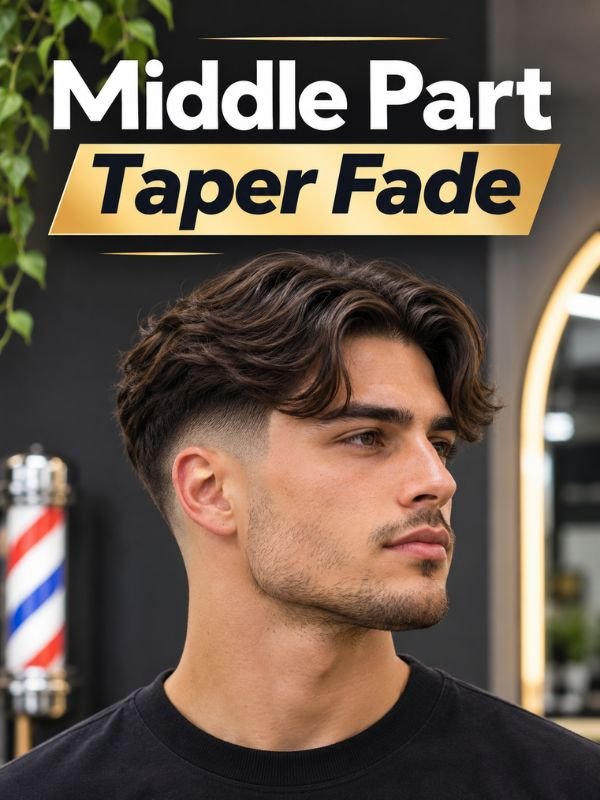
A middle part taper fade is the standard version: a centered part, a medium length top, and a smooth taper on the sides and back. Hair on top usually runs 3 to 4 inches. It falls evenly to both sides and frames the forehead without covering the eyes.
Middle Part Low Taper Fade Straight Hair
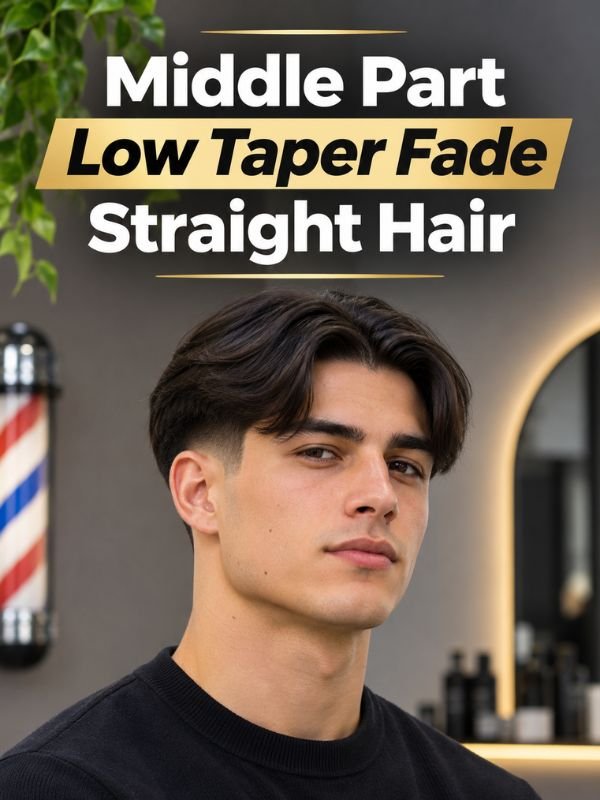
On straight hair, this cut works best with light layering on top. Straight strands fall flat, so a barber can remove weight near the ends to add movement. Without that step, the part can look stiff and the sides of the top can droop.
Styling takes about five minutes. A little matte paste and a quick blow dry keep the part crisp.
Middle Part Low Taper Fade Mullet
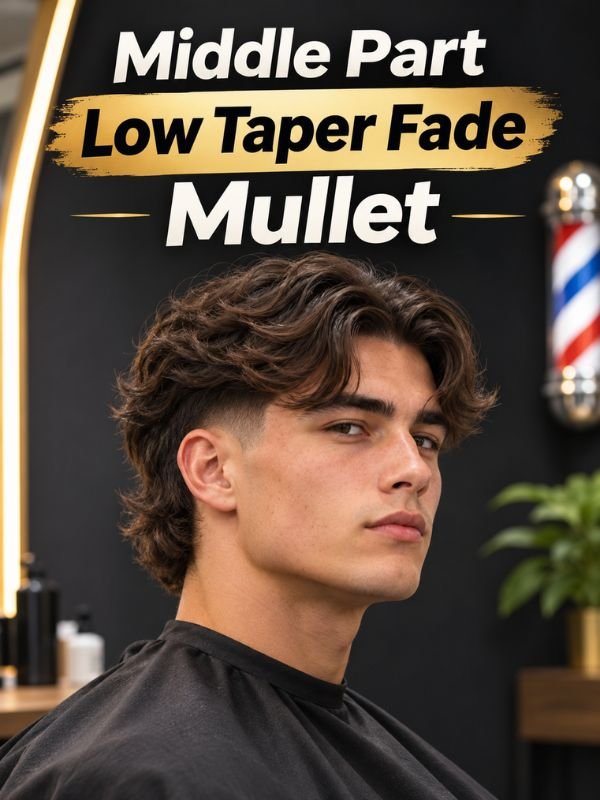
This version keeps the top and back longer while the sides stay tapered close. The back length can sit at the collar or slightly below. It suits guys who want a trend forward look with a clear center part.
Ask for a soft transition from the taper into the back so the shape doesn’t look like two separate haircuts. Wavy hair gives the best flow here. Very fine hair can look thin at the back, so it’s worth asking your barber for an honest opinion.
Middle Part Low Taper Fade Curly Hair
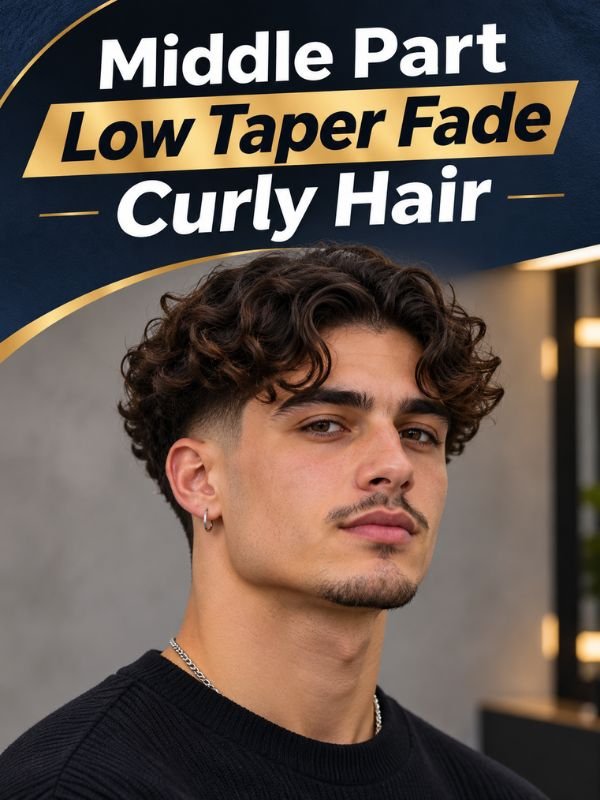
Curly hair creates a natural, springy version of the center part. The curls fall to each side on their own, and the low taper keeps the outline tidy. Many barbers cut curls dry so they can see exactly how each curl sits.
The top usually needs a bit more length than other hair types, often 4 to 5 inches stretched out. Curls pull upward as they dry, which shortens the visible length.
Middle Part Flow Low Taper Fade
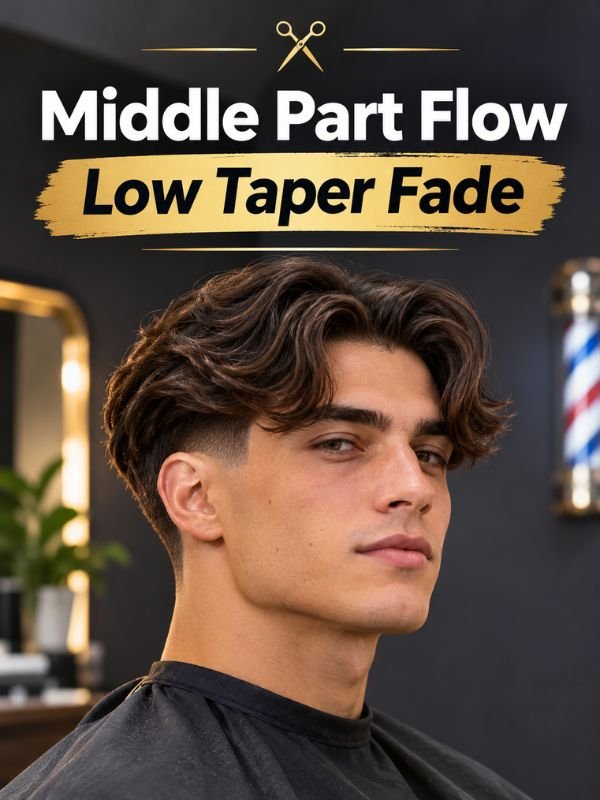
The flow version lets the top grow longer and sweep back or to the sides. Lengths often reach 5 to 7 inches. It requires patience during the grow out phase, however the payoff is hair that moves with you.
Pair this version with a low taper to stop the sides from puffing out as the top gets heavier. A trim every month keeps the ends healthy.
Why It’s Popular in 2026
This cut stays popular because it balances two things men want at once: a modern shape and manageable upkeep. The longer top offers room for personality, while the tapered sides stay neat. It also adapts to different hair textures, which widens its appeal.
Social media plays a part too. The center part photographs well from every angle, and barbers can customize it easily. Since the taper is low, it also grows out more gracefully than a skin fade.
Best Face Shapes for a Middle Part Low Taper Fade
A center part flatters oval, oblong, and diamond faces most, and it can work on round and square faces with small adjustments. The part creates symmetry, so faces with balanced proportions look especially good. Here’s how the cut behaves across common face shapes.
| Face shape | How it works | Adjustment to ask for |
| Oval | Balanced and versatile | Any top length works |
| Oblong | Adds width at the sides | Keep the top shorter, around 2 to 3 inches |
| Round | Can look wider if the sides puff | Add height at the roots and keep the sides tight |
| Square | Softens a strong jaw | Use textured, slightly messy ends |
| Diamond | Frames cheekbones well | Let hair cover part of the forehead |
| Heart | Balances a narrower chin | Keep the top fuller near the ears |
These are general styling guidelines, not strict rules. A good barber will adjust based on your hairline, head shape, and growth patterns.
How It Looks on Straight, Wavy, and Curly Hair
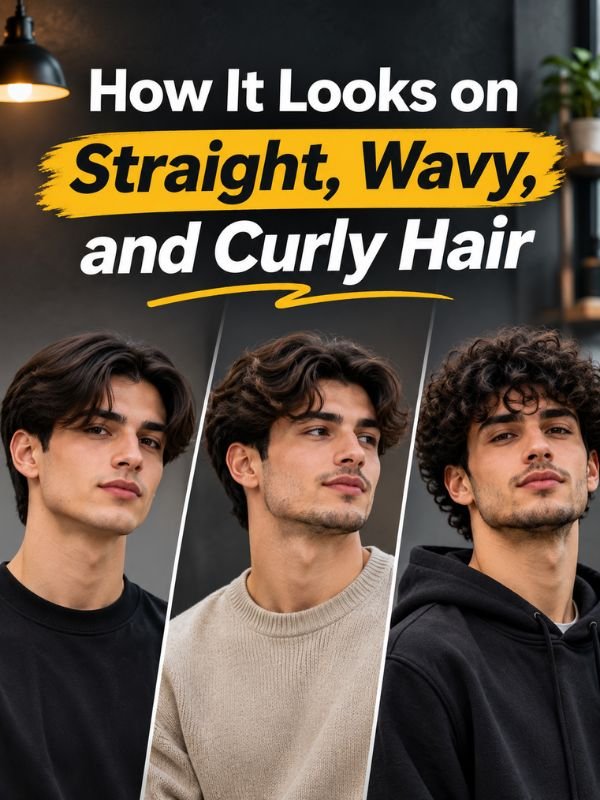
The cut works on every texture, but the result changes with each one. Straight hair looks sleek and structured. Wavy hair gives the most natural looking movement. Curly hair looks fuller and more dimensional.
| Hair type | Look | Styling effort | Watch out for |
| Straight | Sleek, defined part | Low | Flat roots and a stiff part |
| Wavy | Relaxed, easy flow | Low to medium | Frizz in humid weather |
| Curly | Full and textured | Medium | Dryness and shrinkage |
Fine hair may need volume products, while thick hair may need thinning cuts to keep the shape from getting bulky.
Choosing the Right Top Length
The best top length for a middle part is usually between 3 and 5 inches. Shorter than 2 inches, the part barely shows. Longer than 6 inches, the style turns into a flow cut that needs more daily work.
Here’s a quick guide:
- 2 to 3 inches: a subtle part, ideal for straight and fine hair
- 3 to 4 inches: the classic length for most men
- 4 to 5 inches: best for wavy and curly hair
- 5 to 7 inches: flow style, which needs regular conditioning
If you’re growing out a shorter cut, tell your barber you’re aiming for a center part. They can shape the top while it grows so it doesn’t go through an awkward stage.
How to Ask Your Barber
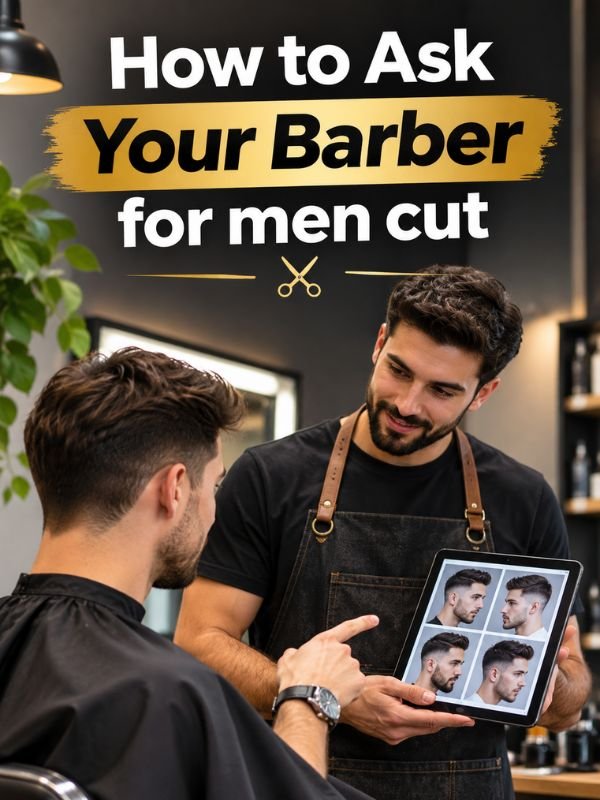
The clearest way to ask is to give three details: where the taper starts, how short the sides get, and how long you want the top. Photos help a lot, but words matter too. Barbers hear “low fade” and “low taper” as different requests.
Try this script:
- “I’d like a low taper fade, starting just above the ear.”
- “Keep the sides short but not skin tight. Maybe a number 1 or 2 guard at the edges.”
- “Leave about 3 to 4 inches on top with a center part.”
- “Add some texture so it falls naturally on both sides.”
- “Clean up the neckline with a natural taper, not a hard block.”
Bring a photo that shows the part and the side view. Mention your hair type as well, because curly and straight hair get cut differently.
Low Taper vs Mid Taper Fade
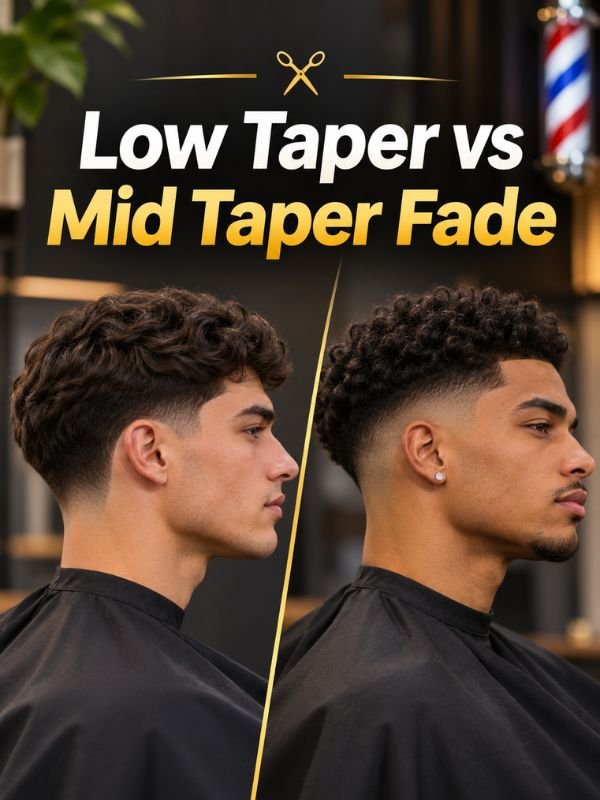
A low taper starts just above the ear and keeps most of the sides intact, while a mid taper starts around the temple and removes more length. The low version looks subtle. The mid version looks bolder and more defined.
| Feature | Low taper | Mid taper |
| Starting point | Just above the ear | Around the temple |
| Contrast | Soft | Moderate |
| Best for | Office and conservative settings | Men who want a sharper outline |
| Grow out | Gradual | Slightly more noticeable |
| Upkeep | Every 3 to 4 weeks | Every 2 to 3 weeks |
If you’re new to fades, start with the low version. You can always go higher on your next visit.
Styling Products That Work

The right product depends on your hair type and the finish you want. Light, flexible products work best because a center part looks natural when hair can still move.
- Matte clay or paste: gives hold without shine, good for straight and wavy hair
- Sea salt spray: adds texture and grip, helpful for fine hair
- Curl cream or leave in conditioner: defines curls and reduces frizz
- Light pomade: adds a slight shine for a polished look
- Texture powder: lifts roots on flat or thin hair
Avoid heavy gels. They tend to flake and make the part look stiff.
How to Style It at Home
You can style this cut in under ten minutes with a towel, a comb, and one product. Follow these steps:
- Start with damp hair after a shower. Towel dry until it stops dripping.
- Use a comb to create the center part, starting at the middle of your forehead.
- Apply a pea sized amount of product to your palms and work it through from roots to ends.
- Blow dry on medium heat while combing the hair outward from the part. Curly hair can air dry or use a diffuser.
- Finish with a light touch of product at the ends and adjust the part.
A common mistake is overloading product. Start small, because you can always add more.
How Often to Maintain It
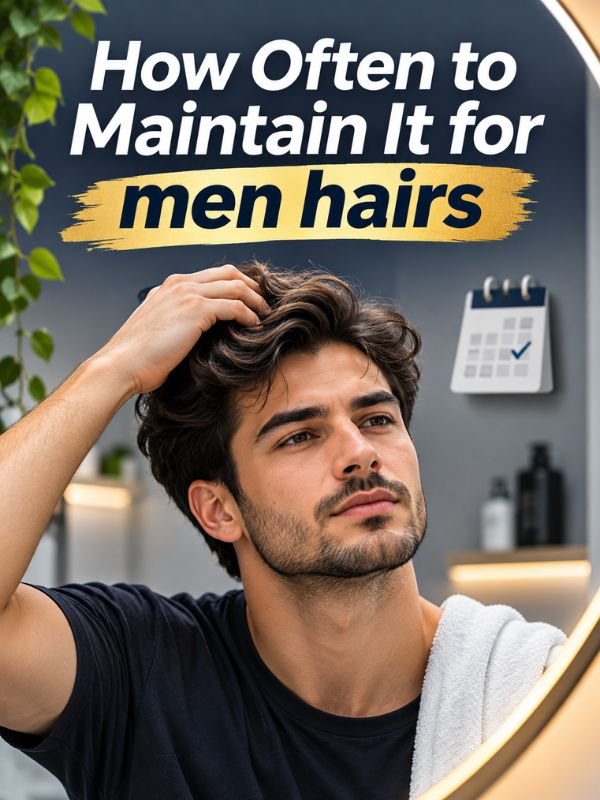
Most men need a trim every 3 to 4 weeks to keep the taper sharp. After that point the sides begin to lose their shape, and the contrast with the top fades. For a super crisp neckline, some men go every two weeks.
Between visits, you can wash the hair two to three times per week and condition the top regularly. Curly and long hair benefit from a conditioner or leave in treatment, since the top can dry out.
If your temples are thinning, a center part can make the change more visible. That’s a styling matter, but if you notice sudden or patchy hair loss, a dermatologist is the right person to check it.
More Variations to Try
Once you’re comfortable with the base cut, these tweaks change the look without changing the structure:
- Hard part: a shaved line marks the part for a sharp, defined edge
- Textured crop top: shorter and messier, a good option for thick hair
- Curtain bangs style: longer front pieces that sweep to each side
- Beard blend: the taper connects smoothly into a short beard
- Slick back option: the same cut combed back for formal events
Each of these works with a low taper. Show your barber a reference photo so you both agree on the final shape.
Explore More Meaning Guide:
Low Taper Fade vs Mid Taper Fade: Best Styles for Men (2026)
Curly Low Taper Fade: Stylish Haircut Ideas for Men (2026)
Frequently Asked Questions
Is a middle part low taper fade good for thin hair?
Yes, it can work well. Light layering and a texture powder add volume, and a low taper keeps the sides from looking too bare.
How long should my hair be for a middle part?
Three to four inches on top is enough for a clear, natural part. Curly hair may need a bit more length.
Does a middle part low taper fade work for work or school?
It does. The low taper keeps the sides conservative, and the top styles easily for professional settings.
Can men with curly hair get a low taper fade?
Absolutely. Curly hair holds the shape well, and the tapered sides keep the curls from looking bulky.
How long does it take to grow out?
The low taper grows out gradually. Most men see the shape soften within three to four weeks, then lose it by week six.
Is a low taper the same as a low fade?
Not exactly. A taper leaves more length at the edges and keeps a natural look, while a fade usually cuts closer, sometimes down to the skin.
Final Thoughts
The middle part low taper fade earns its place because it’s easy to wear and easy to adapt. Choose a top length that suits your hair type, then ask your barber for a low taper that starts above the ear.
Keep your product light, trim every few weeks, and you’ll have a haircut that looks sharp without demanding much time.

Abdul Rehman is an author at HairsJournal, sharing helpful insights on hairstyles, haircuts, hair care, grooming tips, and the latest hair trends for readers.

1 thought on “Best Middle Part Low Taper Fade Hairstyles for Men (2026)”