
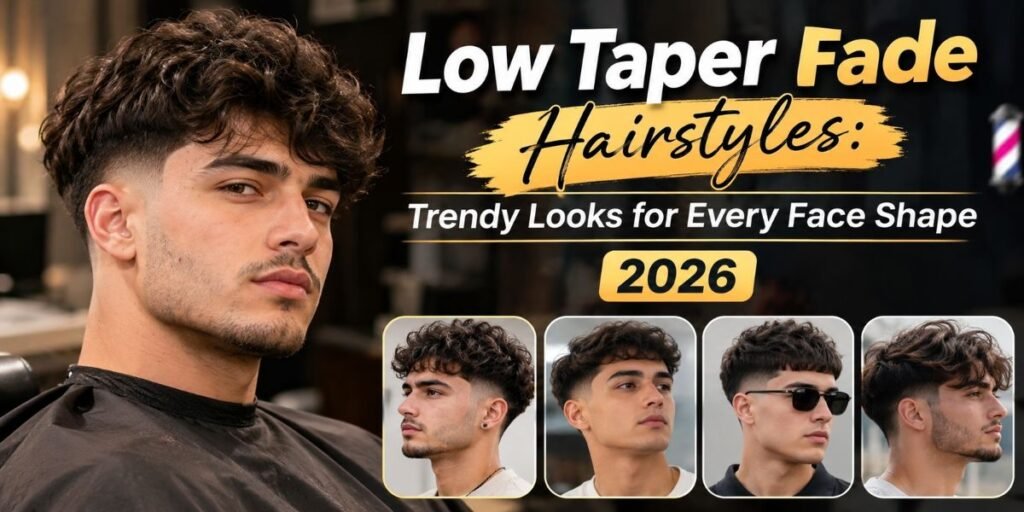
A low taper fade is a haircut where the hair gets gradually shorter around the sideburns and neckline, starting low near the ear. It stays neat without looking harsh. You keep length on top and a clean, soft finish on the sides.
This guide covers what the cut is, how it differs from a standard low fade, and which versions suit curly, straight, and wavy hair. You’ll also get exact words to use with your barber, plus styling and upkeep tips that fit a busy week.
What is a low taper fade haircut?
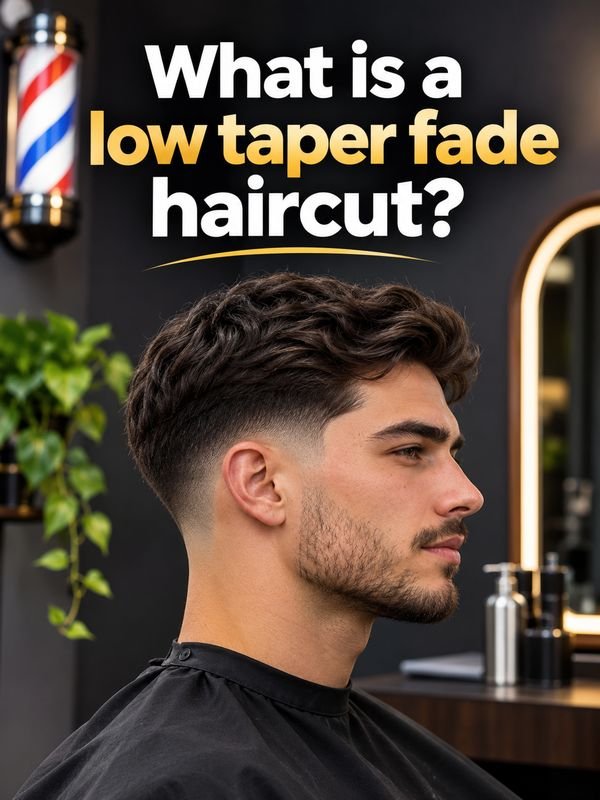
A low taper fade haircut shortens the hair gradually around the ears and the back of the neck. The change in length begins low on the head and stays subtle. The sides never climb high toward the temples.
Think of it as a quiet gradient. The hair at the sideburn and nape gets short, while the rest of the sides keep a bit more length than a skin fade would. That balance makes the cut a safe pick for offices, schools, and weddings.
Barbers usually build it with clippers and guard sizes. They work from short at the bottom to longer as they move up, then blend the transition by hand.
Modern low taper fade
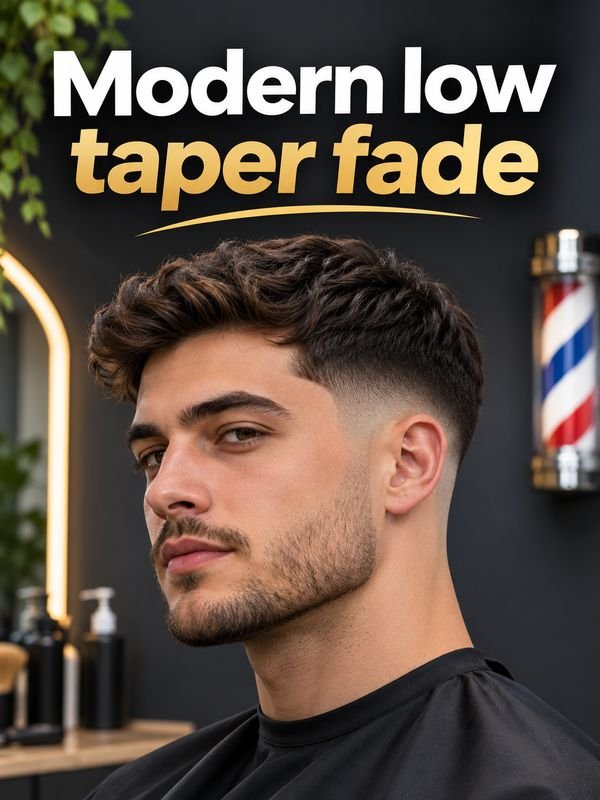
A modern low taper fade pairs the clean edges with a top that has texture and movement. Instead of a stiff, combed look, the top gets cut with layers so it falls naturally and holds shape with a little product.
Popular modern pairings include a short crop, a textured quiff, and a longer, brushed back top. The taper stays the same. Only the top changes, so you can switch your style without redoing the whole cut.
Low taper fade V
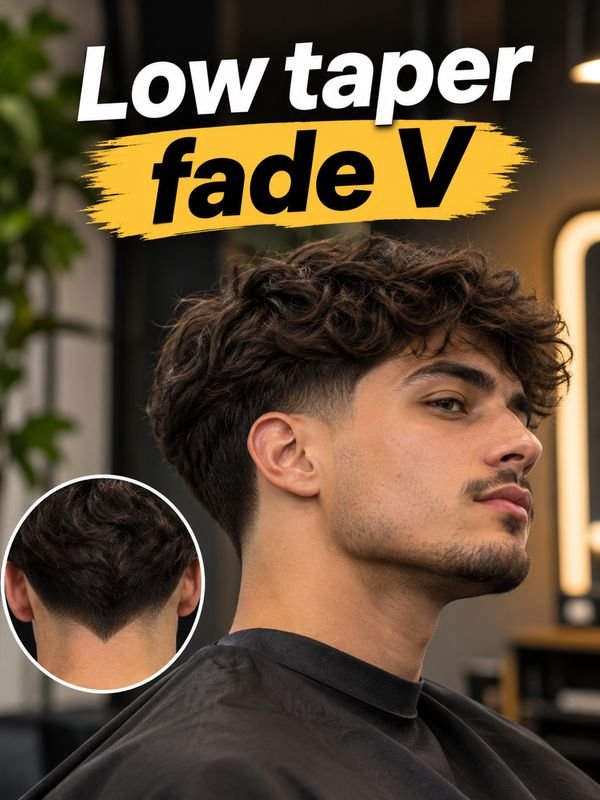
A low taper fade V shapes the back of the neckline into a V instead of a straight or rounded edge. The hair at the nape points downward toward the center, which gives the back a sharp, deliberate look.
This version suits you if you like crisp details. It does grow out faster, though. A V shaped nape loses its definition within a couple of weeks, so plan on frequent touch ups if you want it to stay sharp. A rounded or squared nape forgives more.
Black Low taper fade
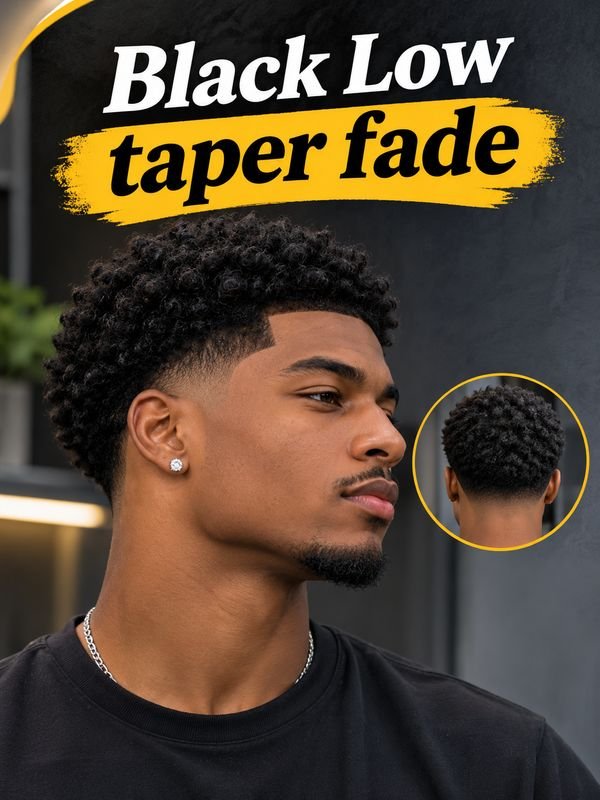
A Black low taper fade works especially well on coily and tightly curled hair because it keeps the sides tidy while the top holds its natural shape. Many barbers pair it with a sharp lineup, a defined part, or a high volume top such as twists, curls, or a sponge style.
Textured hair shows fade lines clearly. That makes clean blending the most important part of the service. Ask your barber to check the transition in good light before you leave. Because tight curls shrink when dry, a top that looks short in the chair may sit a little higher at home.
Low taper fade vs low fade: what’s the difference?
A low taper fade leaves more hair on the sides and blends gradually, while a low fade usually cuts down to the skin or very close to it. Both start low near the ear. The taper looks softer and the fade looks bolder.
| Feature | Low taper fade | Low fade |
| Starting point | Low, near the ear and nape | Low, near the ear and nape |
| Shortest length | Short but usually not skin | Often down to skin |
| Overall look | Soft, natural | Sharp, high contrast |
| Grow out | Gradual and forgiving | Faster to look messy |
| Best for | Office, school, everyday | Bold, clean cut look |
| Visit frequency | Every 3 to 4 weeks | Every 2 to 3 weeks |
If you can’t decide, start with the taper. You can always ask for a closer blend next time.
Why low taper fade haircuts are so popular
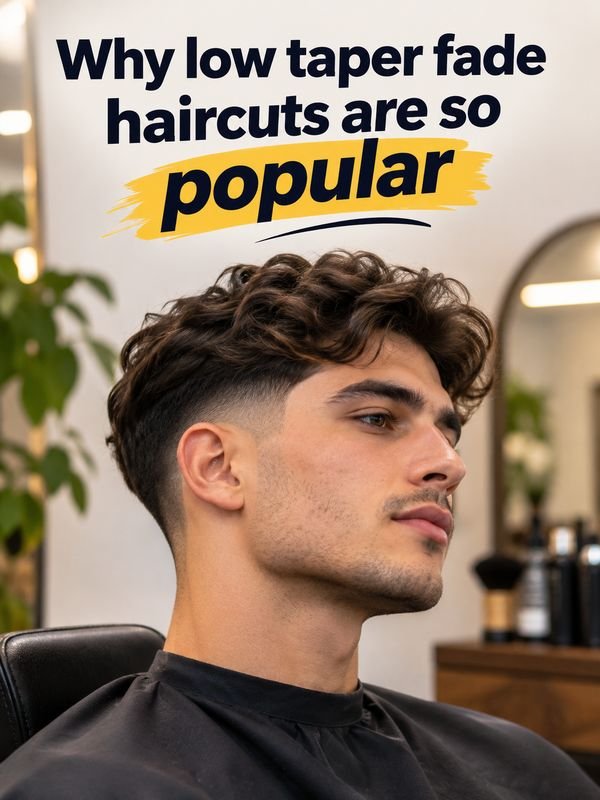
Low taper fades are popular because they look polished, suit many hair types, and don’t demand constant upkeep. They work for a job interview and a night out with the same cut.
Three practical reasons explain the staying power:
- The cut is subtle, so it rarely clashes with a dress code.
- It frames the face without dramatic contrast.
- It grows out more gracefully than a high skin fade.
Social media also plays a part. Short videos of clean blends make barbers’ work easy to show off, and that keeps the style in front of new clients.
Best low taper fade haircuts for men
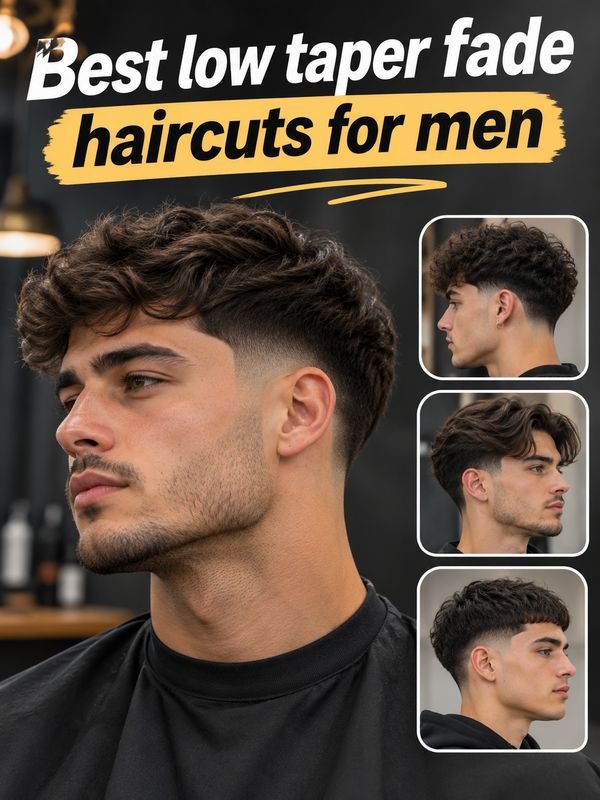
The best low taper fade haircuts for men combine the same neat sides with a top that matches hair type and daily routine. Here are the most requested pairings.
Low taper fade with a textured crop. A short, choppy top that needs only a pinch of matte clay. It takes about two minutes to style.
Low taper fade with a quiff. A longer front lifted upward and back. It needs a blow dryer and a medium hold product, so allow five to eight minutes.
Low taper fade with a side part. A neat, classic option that suits formal settings. A light pomade or cream keeps it in place.
Low taper fade with a buzz cut top. The easiest version. The clippers handle most of the work and you can style it with nothing at all.
Low taper fade with a slick back. Medium length hair combed back with a shiny or satin finish product. It looks sharp but shows messy sides quickly, so you’ll want regular trims.
Low taper fade for curly hair
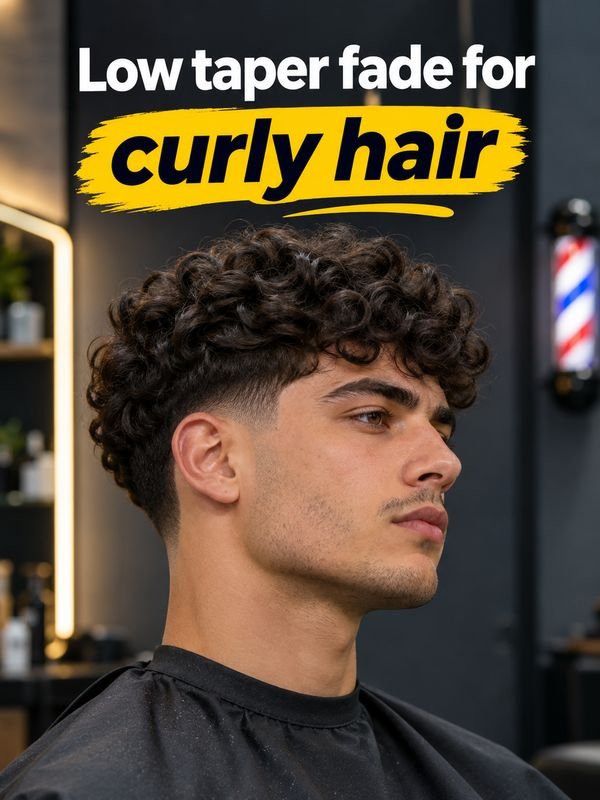
A low taper fade works well for curly hair because it keeps the sides controlled while the curls on top stay full and defined. The contrast makes natural texture look intentional.
Ask your barber to leave enough length on top for the curls to form. Hair that’s too short won’t curl. Most curly textures need at least two to three inches to show a pattern, though it varies by curl type.
For styling, use a curl cream or leave in conditioner on damp hair. Scrunch gently and let it air dry or use a diffuser. Brushing dry curls usually causes frizz, so a wide tooth comb on wet hair works better.
Low taper fade for straight and wavy hair

A low taper fade for straight and wavy hair works best with a top that has layers or texture, because flat, even lengths tend to look heavy. Layers add lift and let the hair move.
Straight hair holds a clean shape but can fall flat. A light texturizing spray or sea salt spray gives it grip. Wavy hair has natural volume, so a lightweight cream or mousse helps the waves group together without weighing them down.
If your hair is thick, ask for some thinning on top. If it’s fine, keep the top a little longer so it doesn’t look sparse next to the shorter sides.
How to style a textured or messy top

To style a textured or messy top, work a small amount of matte product through towel dried or fully dry hair and shape it with your fingers. Aim for movement rather than a perfect finish.
- Start with damp or dry hair, depending on your texture. Fine hair often looks better styled dry.
- Warm a pea sized amount of clay, paste, or fiber in your palms.
- Rub it through the hair from the back to the front.
- Pinch and twist small sections to create separation.
- Finish with a light mist of texturizing spray if you want extra hold.
The most common mistake is using too much product. Add more in small amounts. You can’t take it out without washing your hair.
How to ask your barber for a low taper fade

To ask for a low taper fade, say you want the sides tapered low around the ears and neckline with some length kept on the sides, then describe what you want on top. Showing a photo helps more than any description.
Here’s a script you can use:
- “I’d like a low taper fade. Keep it low around the ear and the back of the neck.”
- “Please leave a bit of length on the sides. I don’t want to go down to skin.”
- “On top, I’d like about two inches, textured, with some length at the front.”
- “Can you finish with a natural neckline instead of a squared one?”
Mention your part, your usual styling routine, and any cowlicks. Barbers can plan the cut around hair that grows in an odd direction, but only if they know about it.
How to style and maintain a low taper fade
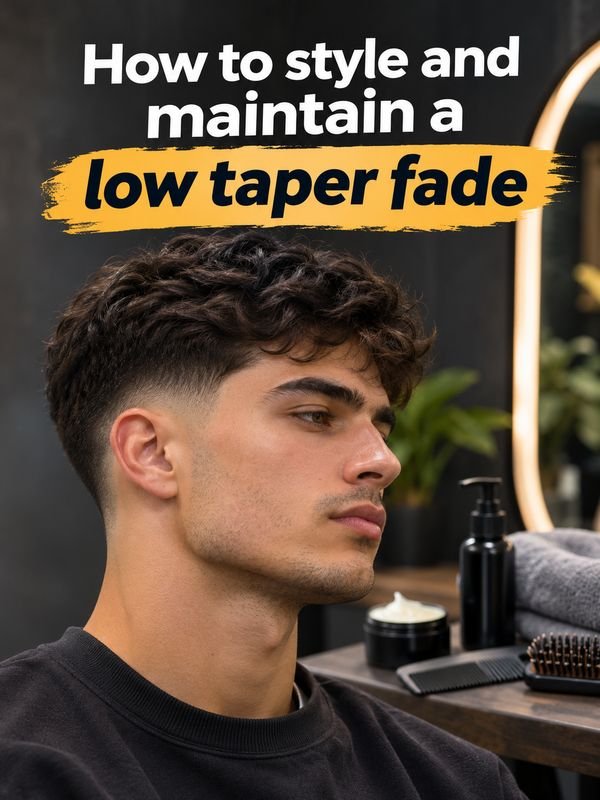
To maintain a low taper fade, book a trim every three to four weeks, wash your hair as your scalp needs, and use product suited to your hair type. The taper loses its shape as the sides grow in, so regular visits matter more than daily effort.
A simple routine looks like this:
| Hair type | Product | Styling time | Upkeep |
| Straight | Texturizing spray, light clay | 2 to 4 minutes | Trim every 3 to 4 weeks |
| Wavy | Cream or mousse | 3 to 5 minutes | Trim every 3 to 4 weeks |
| Curly | Curl cream, leave in conditioner | 5 to 10 minutes | Trim every 2 to 4 weeks |
| Coily | Moisturizer, defining cream or oil | 5 to 10 minutes | Lineup every 1 to 2 weeks |
Keep the neckline clean between visits if you’re comfortable doing it. If not, leave it alone. A crooked home trim does more harm than a slightly fuzzy edge.
A note on scalp health: if you notice thinning patches, persistent flaking, or irritation, see a doctor or dermatologist. Styling tips can’t diagnose or treat those issues.
Does a low taper fade suit your face shape?

A low taper fade suits most face shapes because it’s subtle, but the top can be adjusted to balance your features. Here’s how the choice usually plays out.
| Face shape | What works | What to watch |
| Oval | Almost any top length | Very few limits |
| Round | Height and volume on top | Avoid a flat, wide top |
| Square | Textured or softer tops | Overly sharp, boxy styles |
| Oblong | Shorter, fuller tops with fringe | Too much height on top |
| Heart | Side swept or textured fringe | A very short top that stresses the forehead |
| Diamond | Fuller sides and a softer top | Slicked back looks that expose the cheekbones |
Face shape guides are a starting point. Hairlines, ear size, and hair density matter just as much, so ask your barber for an honest opinion.
The bottom line
Choose a low taper fade if you want a clean, professional look that’s easy to live with. Pick a low fade instead if you prefer a bolder, high contrast finish and don’t mind more frequent visits.
Match the top to your texture. Keep length for curls, add layers for straight hair, and use light products for waves. Bring a photo, use clear words with your barber, and book your next appointment before you leave.
Go deeper: low taper fade guides
Once you’ve settled on a base cut, these topics are worth exploring next:
- Low taper fade with a beard
- Low taper fade for thinning hair
- Low taper fade with a lineup and part
- Low taper fade for teens and boys
- Mid taper fade vs low taper fade
- Best hair products for a textured top
Explore More Hairs Guide:
Curly Low Taper Fade: Stylish Haircut Ideas for Men (2026)
Low Taper Fade vs Mid Taper Fade: Best Styles for Men (2026)
Best Middle Part Low Taper Fade Hairstyles for Men (2026)
Low Taper Fade Short Hair: Modern Cuts and Easy Upkeep 2026
Best Drop Fade Textured Fringe Hairstyles for Men (2026)
Frequently Asked Questions
What is the difference between a taper and a fade?
A taper gradually shortens hair at the sideburns and neckline while keeping more length overall. A fade cuts much shorter, often to the skin, and covers more area.
How often should you get a low taper fade touched up?
Most people need a touch up every three to four weeks. Sharper versions with a V neckline or lineup may need a visit every two weeks.
Does a low taper fade work for thin hair?
Yes, it works if you keep the top a little longer and choose light products. A textured crop or short quiff usually adds the look of fullness.
Can you get a low taper fade with long hair on top?
Yes. The taper only affects the sides and neckline, so you can keep medium or long hair on top for a slicked back style, a flow, or a man bun.
Is a low taper fade professional enough for work?
Yes, it’s one of the safest cuts for office settings. The soft blend looks neat and doesn’t draw attention.
How long does a low taper fade take to grow out?
It looks good for about three to four weeks. After that, the sides fill in and the taper loses its definition, though it grows out without an awkward stage.
What number clipper guard is used for a low taper fade?
Barbers vary, but they often work from a very short guard at the base and step up to longer ones. The exact sizes depend on your hair and the look you want, so describe the result rather than a number.
Final Thoughts
A low taper fade gives you a haircut that looks sharp on day one and still looks good on day twenty. It adapts to curls, waves, and straight hair, and it flatters most face shapes with the right top.
Start with a clear reference photo and a short list of what you want. Your barber will handle the rest. If the first attempt isn’t quite right, small adjustments next visit will get you there.

Abdul Rehman is an author at HairsJournal, sharing helpful insights on hairstyles, haircuts, hair care, grooming tips, and the latest hair trends for readers.
