
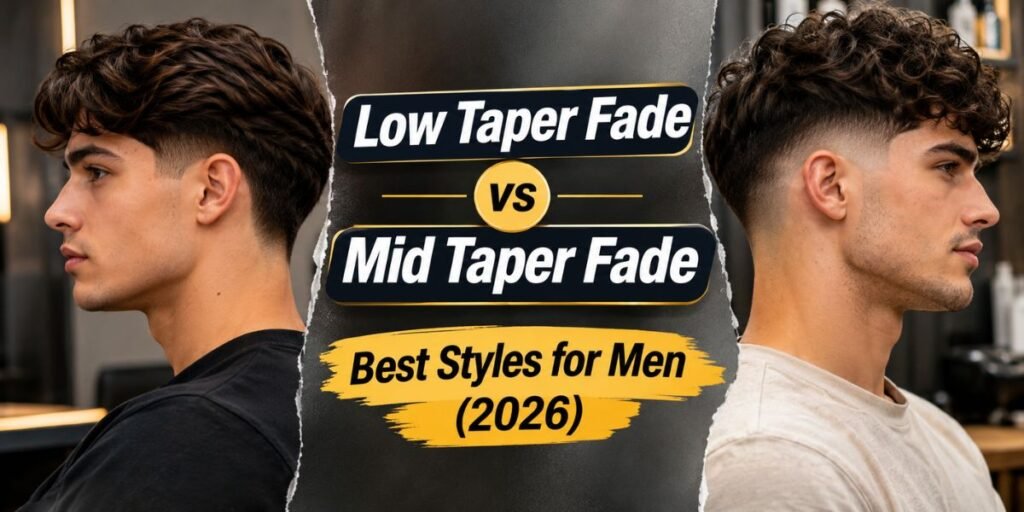
Both cuts blend longer hair on top into shorter sides. The difference is height. A low taper fade starts near the ear and neckline, while a mid taper fade starts higher, around the temple. This guide shows you how each looks, who each suits, and exactly what to say in the barber chair.
The Short Version
A low taper fade is subtle and easier to maintain. A mid taper fade is sharper and more noticeable. Choose the low taper for a conservative, grown-out-friendly look. Choose the mid taper when you want clear contrast and a cleaner outline.
| Feature | Low Taper Fade | Mid Taper Fade |
| Fade starts | Just above the ear and around the neckline | Around the temple, level with the top of the ear |
| Contrast | Soft | Moderate to strong |
| Best for | Office settings, longer tops, first-timers | Thick or curly hair, defined looks |
| Typical upkeep | Every 3 to 4 weeks | Every 2 to 3 weeks |
| Growth-out | Forgiving | Shows sooner |
What Is a Low Taper Fade?
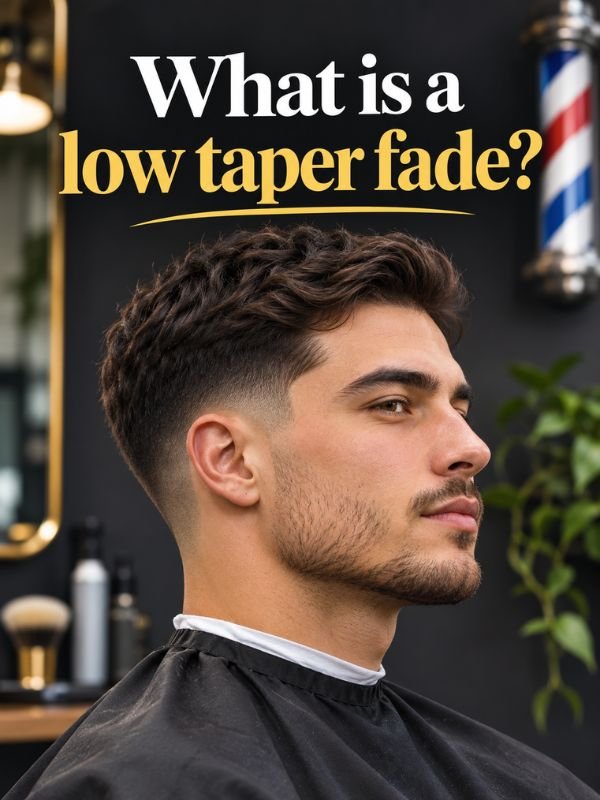
A low taper fade is a haircut where the sides and back shorten gradually, starting low near the ear and nape. The hair above stays full and untouched.
Because the fade hugs the hairline, the cut keeps most of your natural head shape. It reads as neat rather than dramatic. That makes it a safe pick if you want a clean cut that still looks like “your” hair.
Low Taper Fade vs Mid Taper Fade Straight Hair
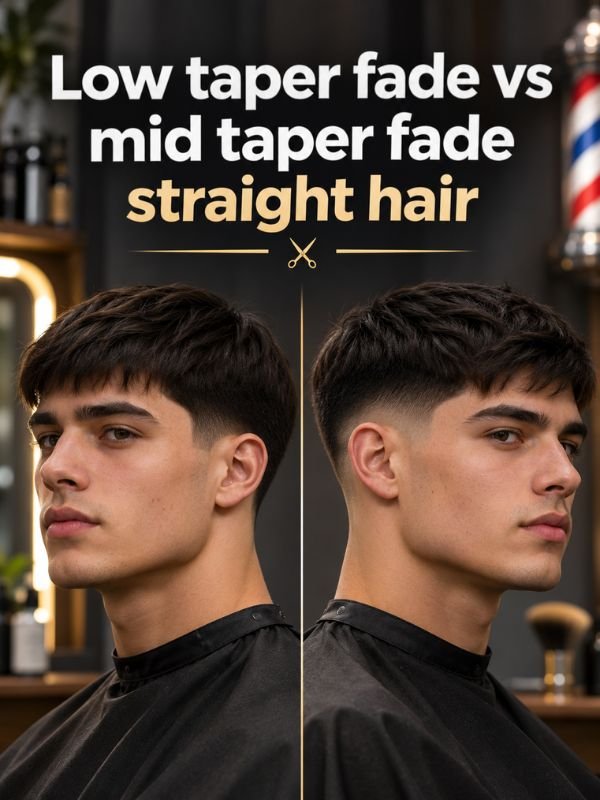
Straight hair shows fade lines clearly, so the lower option looks softer and the higher option looks crisper. A low taper suits straight hair that lies flat, since the blend stays smooth with little effort. A mid taper works well when straight hair is thick and tends to stick out at the sides.
Cowlicks matter here. If your hair swirls at the crown or nape, tell your barber before the clippers come out. A small shift in fade height can hide a stubborn growth pattern.
Low Taper Fade vs Mid Taper Fade Reddit
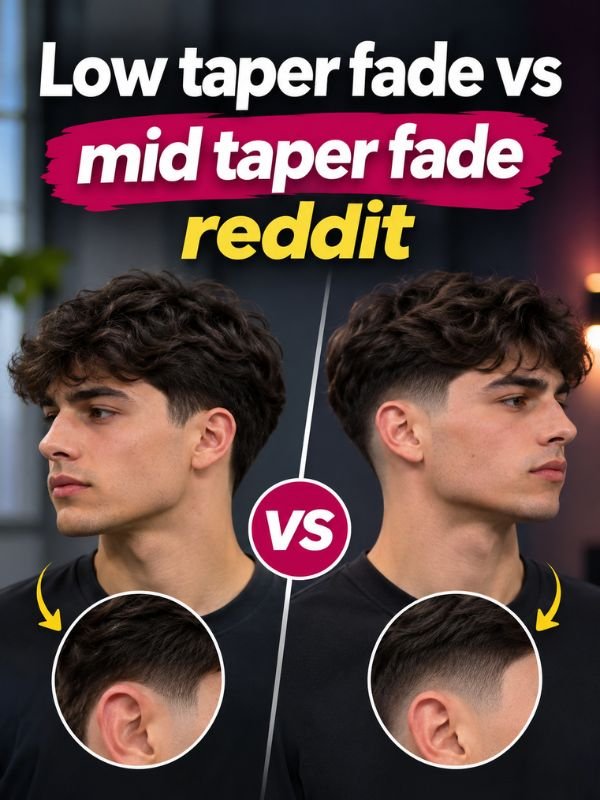
Forum advice usually splits on one question: how much upkeep will you tolerate? Many commenters favor the low taper for its easy grow-out. Others lean toward the mid taper for the cleaner shape. Treat those opinions as personal preference rather than expert data.
Your hair type and schedule should drive the choice. A thread can’t see your cowlick or your calendar. A reference photo and a conversation with your barber will beat a dozen anonymous votes.
Low Taper Fade vs Mid Taper Fade Black
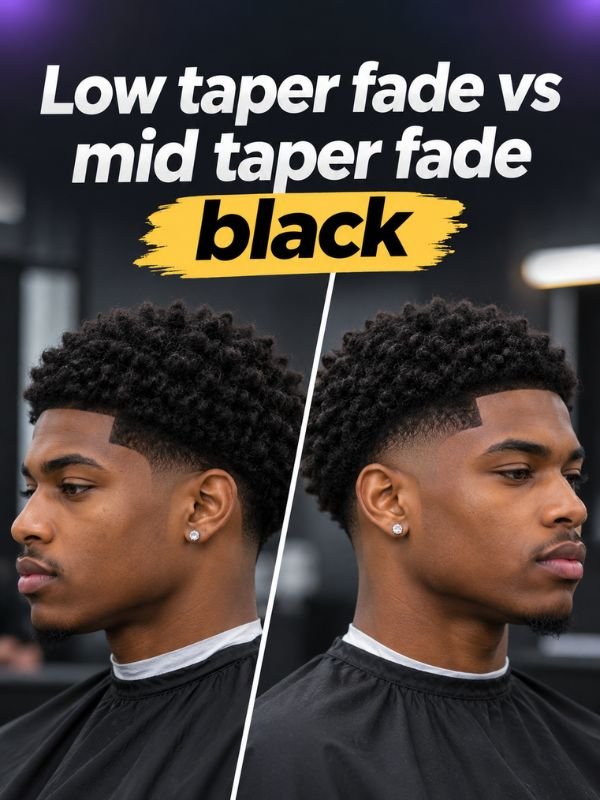
Both cuts work well on Black hair, and the right height depends on texture, top length, and the contrast you want. A low taper keeps a soft outline that lets waves, twists, or a natural afro shape stand out. A mid taper creates more separation between the sides and the top, which can make coils and curls look fuller.
Find a barber who regularly works with your texture. Tight coils behave differently under clippers than straight strands. Ask to see their recent work before you book.
Low Taper Fade vs Mid Taper Fade Curly Hair
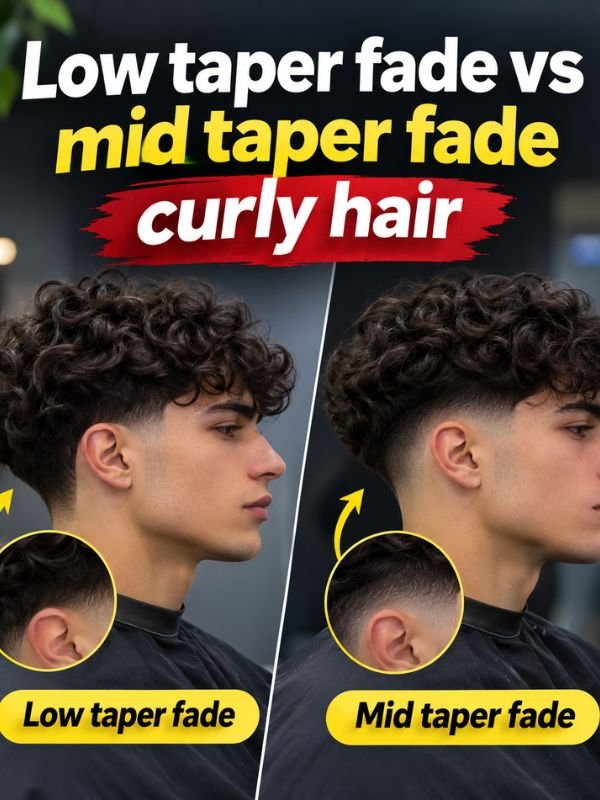
For curly hair, the mid taper usually tames bulk better while the low taper preserves more curl. Higher placement removes weight from the sides, so curls on top don’t balloon outward. A low taper leaves more length around the ears, which suits looser curls.
Curls shrink as they dry. Ask your barber to cut the top with that in mind. A top that looks long when wet can spring up a full inch or more once it dries.
High Taper Fade
A high taper fade starts well above the ear, near the upper temple. It delivers the strongest contrast of the three levels.
You get a bold, tight outline that frames the face. The trade-off is faster visible growth. Most men who choose a high taper book a trim more often than those who pick a low or mid height.
Mid Taper vs Mid Taper Fade
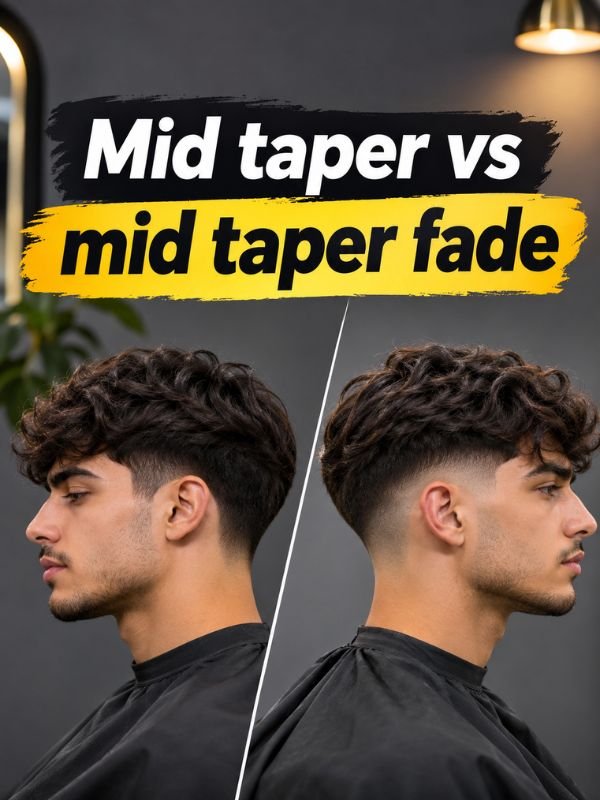
A mid taper keeps a little length at its shortest point, while a mid taper fade often goes shorter, sometimes to skin. Both begin at the same height. The difference is how short the sides get at the bottom.
A classic taper usually stops at a short clipper guard and leaves visible hair. A fade can finish at a much shorter length, which creates a sharper gradient. If you want the mid placement but a gentler finish, ask for a “mid taper, not skin.”
What Is a Mid Taper Fade?
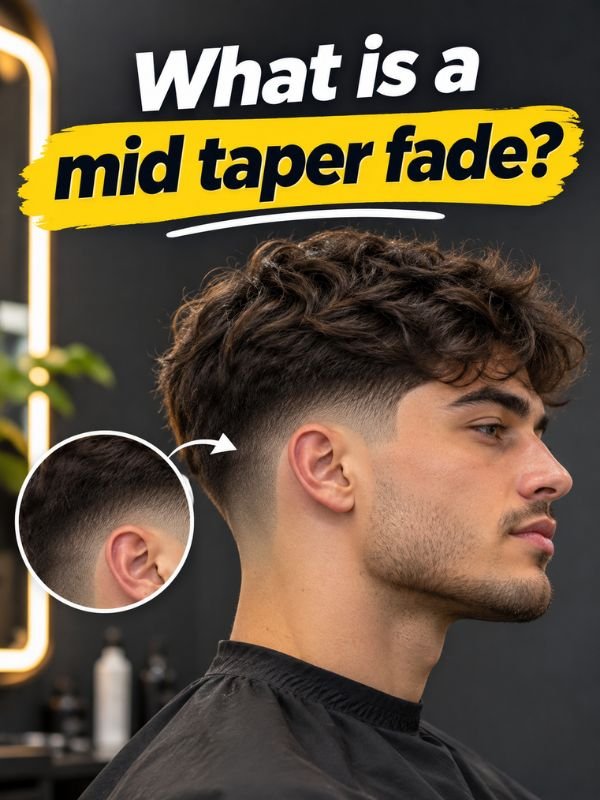
A mid taper fade is a haircut where the hair shortens gradually starting around the temple and mid-ear. It sits between the soft low version and the bold high version.
Think of it as the balanced option. It slims the sides, clears bulk from thick hair, and still looks appropriate in most workplaces. Barbers often call it the most versatile height for that reason.
How the Two Look Side by Side
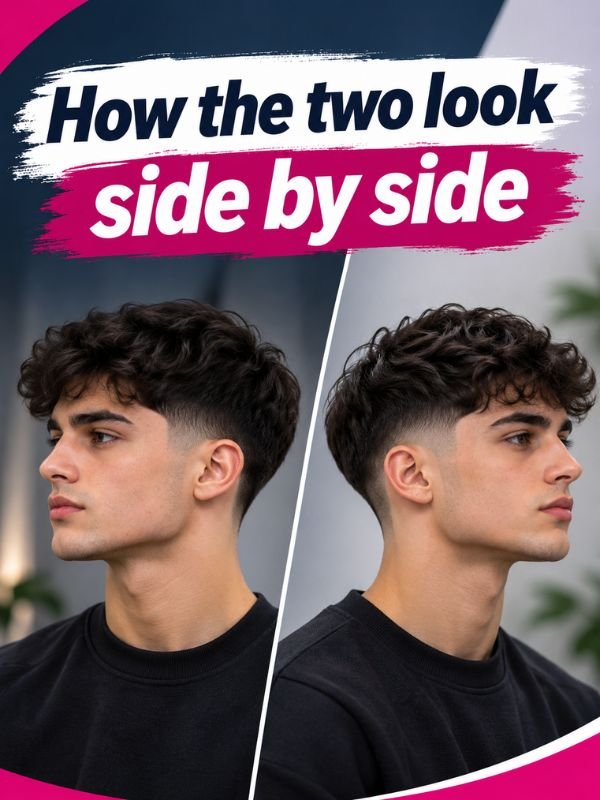
From the front, the low taper looks nearly natural while the mid taper shows a clear transition. From the side, the low version outlines only the ear and neck. The mid version opens up more of the sides and makes the top look fuller by comparison.
Here is a quick way to picture it. Draw an imaginary line from the top of your ear to your temple. A low taper stays below the ear. A mid taper climbs to that line.
Which One Looks More Professional?
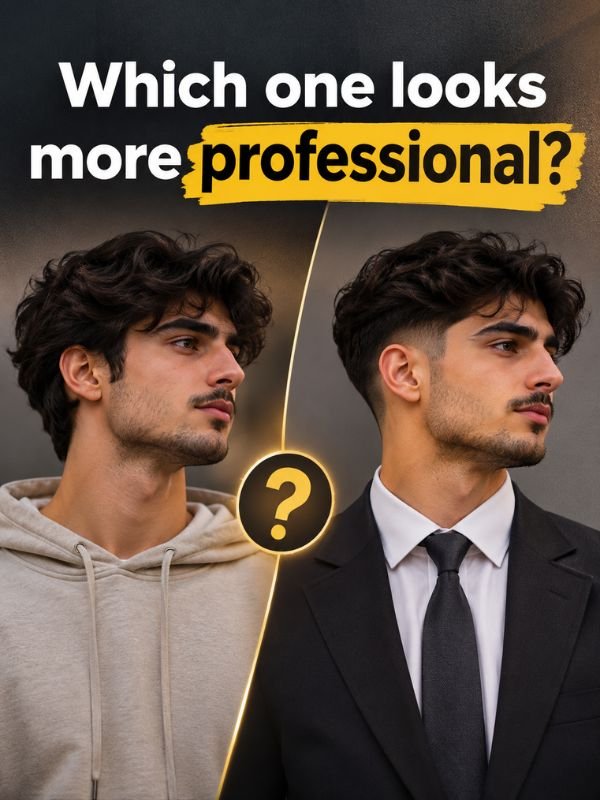
Both look professional, but the low taper fade is the more conservative choice. It blends quietly and rarely draws attention. That suits formal offices, interviews, and traditional environments.
A mid taper still works at most jobs when kept neat. Pair it with a clean part or a short textured top. It adds polish without looking aggressive.
Which Fade Suits Your Face Shape?
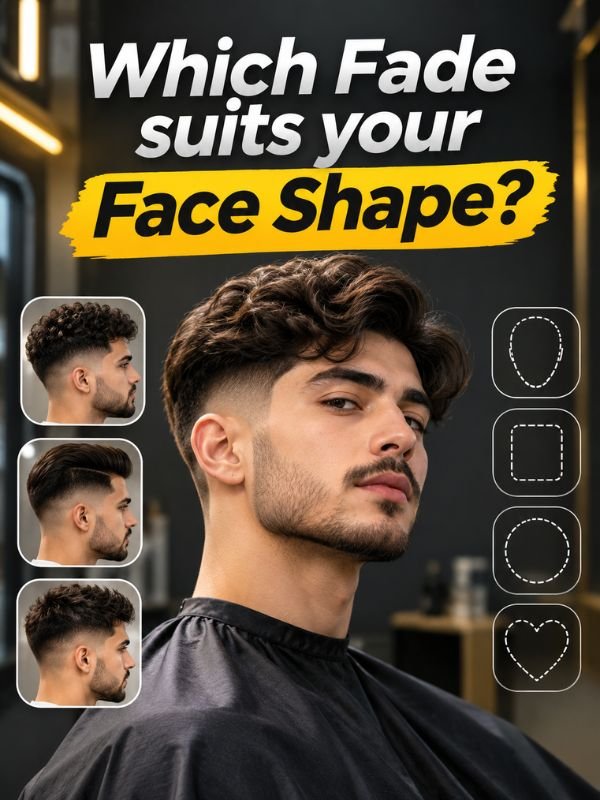
Match the fade height to your face shape to balance your proportions. Higher fades add visual height and narrow the sides. Lower fades keep width.
- Round face: A mid taper adds vertical lines and slims the sides.
- Square face: A low taper softens the jaw and keeps the outline balanced.
- Oval face: Either height works. Pick based on how much contrast you want.
- Long or oblong face: A low taper avoids stretching the face further.
- Heart-shaped face: A low or mid taper both work. Keep the top slightly fuller.
Which One Works Better for Your Hair Type?
Hair type decides how well each fade holds its shape. The right height works with your density and texture instead of fighting it.
| Hair type | Better fit | Why |
| Fine or thin | Low taper | Keeps weight at the sides so the top doesn’t look sparse |
| Thick | Mid taper | Removes bulk that makes the head look wide |
| Wavy | Low or mid | Low keeps waves soft. Mid gives structure |
| Curly or coily | Mid taper | Controls volume at the sides |
| Straight | Either | Choose by contrast preference |
Thinning at the temples or crown calls for a different approach. A barber can adjust the cut, but persistent shedding or patchy loss deserves a conversation with a doctor or dermatologist.
Pairing Each Fade With Popular Top Styles
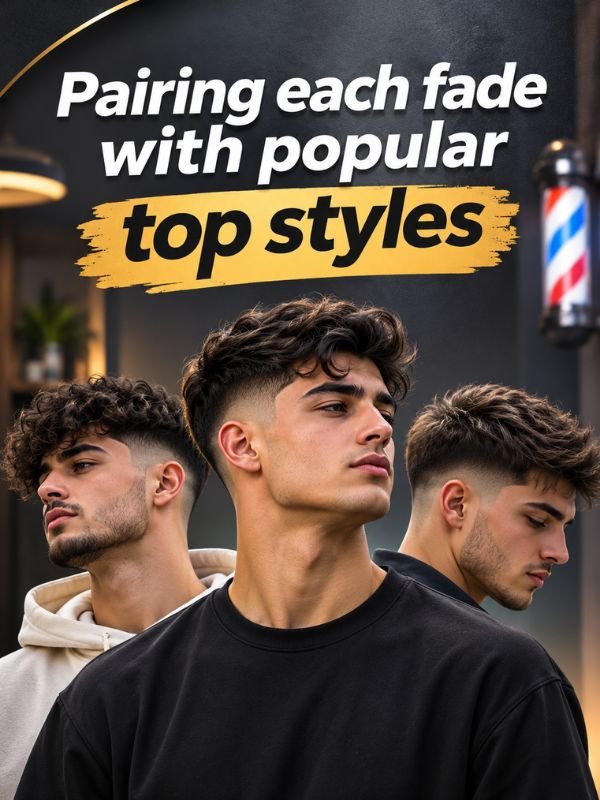
Both fades pair with nearly any top, though some combinations shine more than others.
Low taper fade works well with:
- Side part
- Textured crop
- Quiff
- Longer, swept-back hair
- Natural curls or a short afro
Mid taper fade works well with:
- Pompadour
- Slick back
- Short curls or twists
- Messy fringe
- High-volume textured tops
A good rule: the longer and fuller the top, the more a mid taper helps balance the shape.
Maintenance: Which One Lasts Longer?
The low taper fade lasts longer because it grows out softly. Because its blend starts near the hairline, regrowth looks gradual rather than messy. Most barbers suggest a trim every three to four weeks for a low taper.
A mid taper fade usually needs a refresh every two to three weeks. The cleaner contrast fades out faster. Fades that finish at skin age even quicker than tapers with some length left.
Fine hair tends to grow more slowly, so it can stretch the time between cuts. Fast-growing hair needs more frequent visits.
Everyday Styling and Products

Styling takes about two to five minutes with either cut. You don’t need much product. Match the product to your texture and the finish you want.
- Towel dry your hair until it’s damp.
- Apply a pea-sized amount of product to your fingers.
- Work it through the top from roots to ends.
- Shape with a comb or your hands.
- Set the style with a quick blast from a blow dryer if needed.
Product guide:
- Matte clay or paste: Texture and hold without shine. Works for crops and fringes.
- Pomade: Shine and control for side parts and pompadours.
- Sea salt spray: Light texture for wavy or straight hair.
- Curl cream or leave-in conditioner: Definition and moisture for curls and coils.
Wash with a mild shampoo and avoid heavy buildup. Clean hair holds the fade line better.
Pros and Cons at a Glance
| Low Taper Fade | Mid Taper Fade | |
| Pros | Subtle and neat, forgiving growth-out, easy for beginners | Sharper outline, controls bulk, modern look |
| Cons | Less contrast, may look too plain for some | Needs more frequent trims, bolder than some workplaces prefer |
How to Ask Your Barber
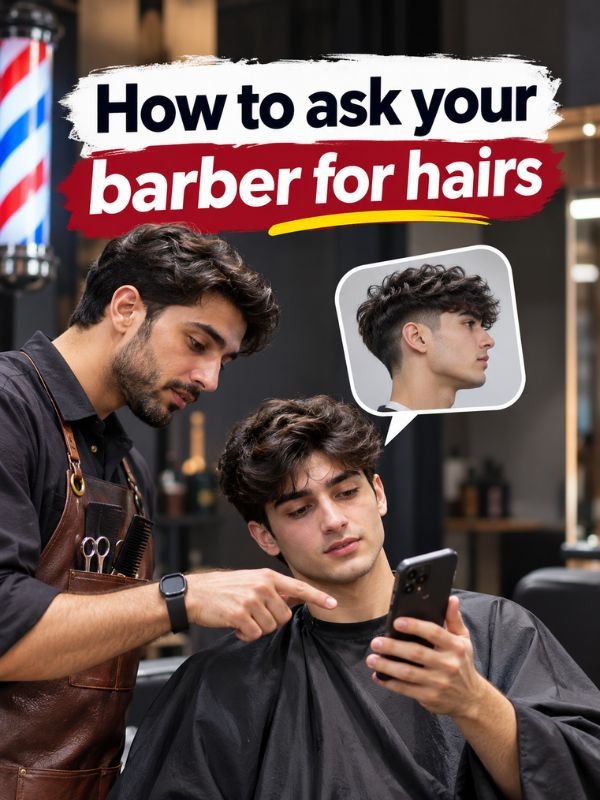
Bring a photo and name the fade height, the shortest length, and the top. Barbers differ in how they use terms, so specifics prevent surprises.
Try this script:
- “I’d like a [low or mid] taper fade.”
- “Start the fade [just above my ear or at my temple].”
- “Leave some length at the shortest point” or “take it down to skin.”
- “Keep the top [length] and blend it smoothly.”
- “Clean up the neckline [natural, rounded, or squared].”
Mention how often you plan to visit. A good barber will adjust the cut to match.
Common Mistakes to Avoid
Most bad tapers come from vague requests or poor timing, not bad luck. Avoid these.
- Saying “just a fade.” Fade can mean anything from a soft taper to a skin fade.
- Skipping the reference photo. Words get misread. Pictures don’t.
- Picking a height that fights your hair. Thick curls on a very low taper can look bulky.
- Waiting too long between cuts. A mid taper loses its shape quickly.
- Ignoring the neckline. A sloppy back line ruins a good fade.
- Overusing heavy product. Greasy hair hides the blend.
Explore More Hair Guide:
Curly Low Taper Fade: Stylish Haircut Ideas for Men (2026)
Final Verdict: Low Taper Fade or Mid Taper Fade?
Pick the low taper fade if you want a clean, understated cut that grows out well. Pick the mid taper fade if you want more definition and have thick or curly hair to manage. Neither is wrong.
Still unsure? Start with a low taper. You can always ask your barber to go higher next time. Going back down takes weeks of growth.
Frequently Asked Questions
What is the main difference between a low taper fade and a mid taper fade?
Height. A low taper starts near the ear and neckline, while a mid taper starts around the temple.
Which is better for a professional setting?
The low taper fade is the more conservative option. A neat mid taper also works in most offices.
How often should I get a taper fade trimmed?
Most barbers recommend every two to four weeks. Low tapers last toward the longer end.
Is a taper fade the same as a regular fade?
No. A taper usually leaves some visible hair at the shortest point, while a fade can go down to skin.
Does a mid taper fade work on curly hair?
Yes. It removes side bulk and keeps curls on top defined.
Which fade is best for a round face?
A mid taper often works best because it adds height and slims the sides.
How long does a taper fade take?
Most appointments run about 20 to 45 minutes, depending on your hair and the barber.

Abdul Rehman is an author at HairsJournal, sharing helpful insights on hairstyles, haircuts, hair care, grooming tips, and the latest hair trends for readers.

2 thoughts on “Low Taper Fade vs Mid Taper Fade: Best Styles for Men (2026)”